Mafia Club
The City Sleeps is a platform for clubs that host Mafia games. It brings together a public site for players and a workspace for running the games.
Overview
Context
Players used the public site to find games in different cities, check venues, rules and prices, and sign up. In their accounts, they could track bookings, statistics and rankings. Club owners, administrators and game hosts used the workspace to manage events, payments and games.
Previously, clubs used social networks, chats, forms and spreadsheets. Staff coordinated handovers manually. Booking requests could go missing or appear twice, and information on available seats and payments quickly went out of date.
The challenge
We needed to do more than move existing data into a single interface: we had to formalise a complex system of roles, statuses and dependencies.
One user could own one club, administer another, host games at a third and still be a player. Available sections and actions depended on the selected club, role and individually configured permissions.
The product’s entities were also connected. Club settings affected the available payment methods, pricing plans determined booking conditions, and changing a booking status could simultaneously change its payment status and trigger a refund flow.
The task was to create a single workspace that helped staff follow the established process, reduced manual coordination and kept data up to date for the whole team.
Research
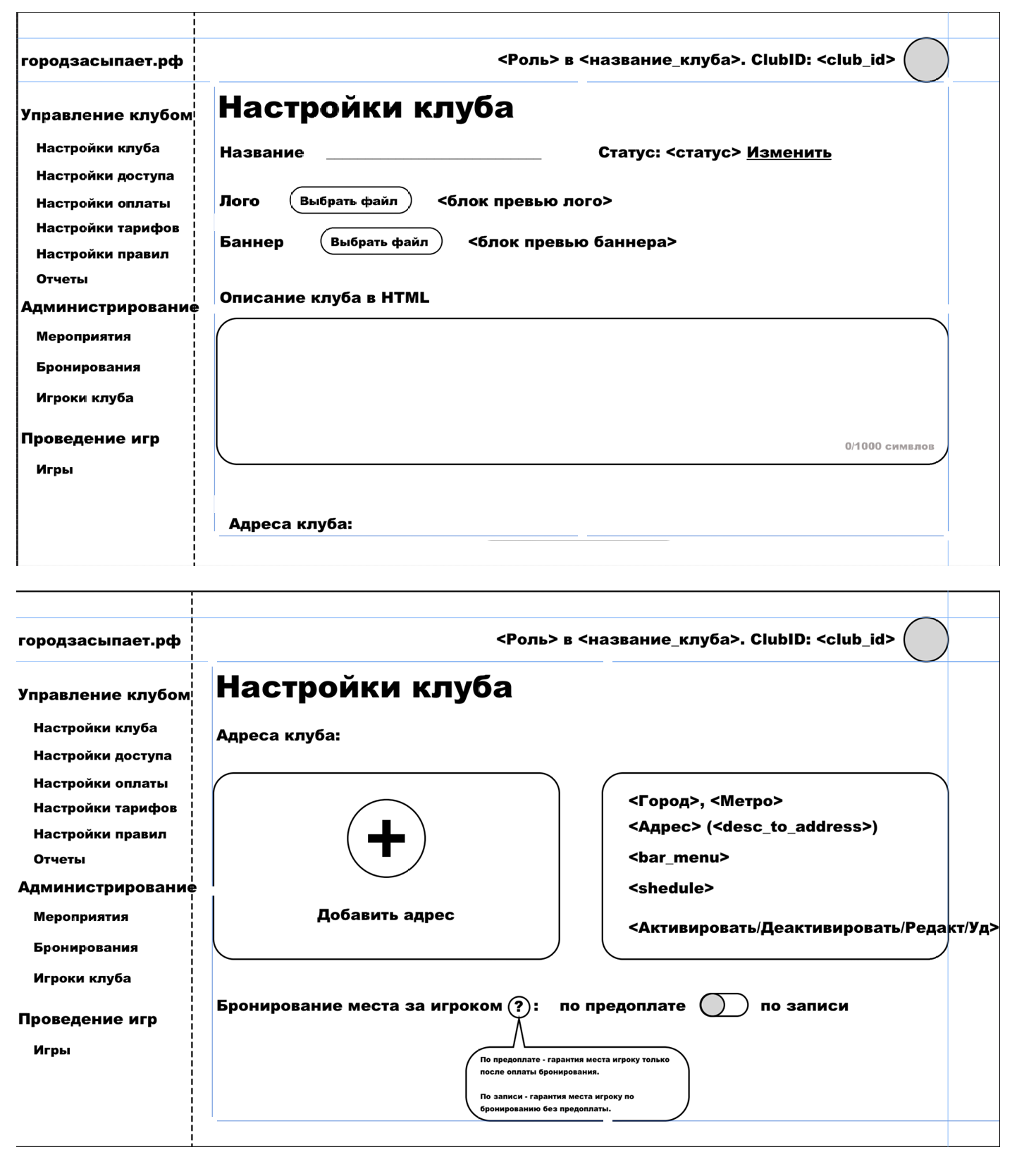
The work began by breaking down a 53-page functional specification. It described the product through roles, entities, database fields, statuses and their dependencies.
The accompanying prototypes illustrated the required features. I used the specification to design the sequences that owners, administrators and hosts would follow.
Together with the product manager, I clarified business rules and edge cases. I examined how an owner manages a club, which actions administrators and hosts perform, and how the interface should change according to roles and permissions.
I also studied similar services for managing events and internal operations, comparing account structures, roles, bookings, pricing and payments.
The analysis defined the main areas of my work:
- Club settings and related parameters;
- Roles and access levels;
- Payment methods and pricing;
- Creating and processing bookings.
Process
Club settings
I first designed the basic structure of the owner’s account and the flows for managing a club.
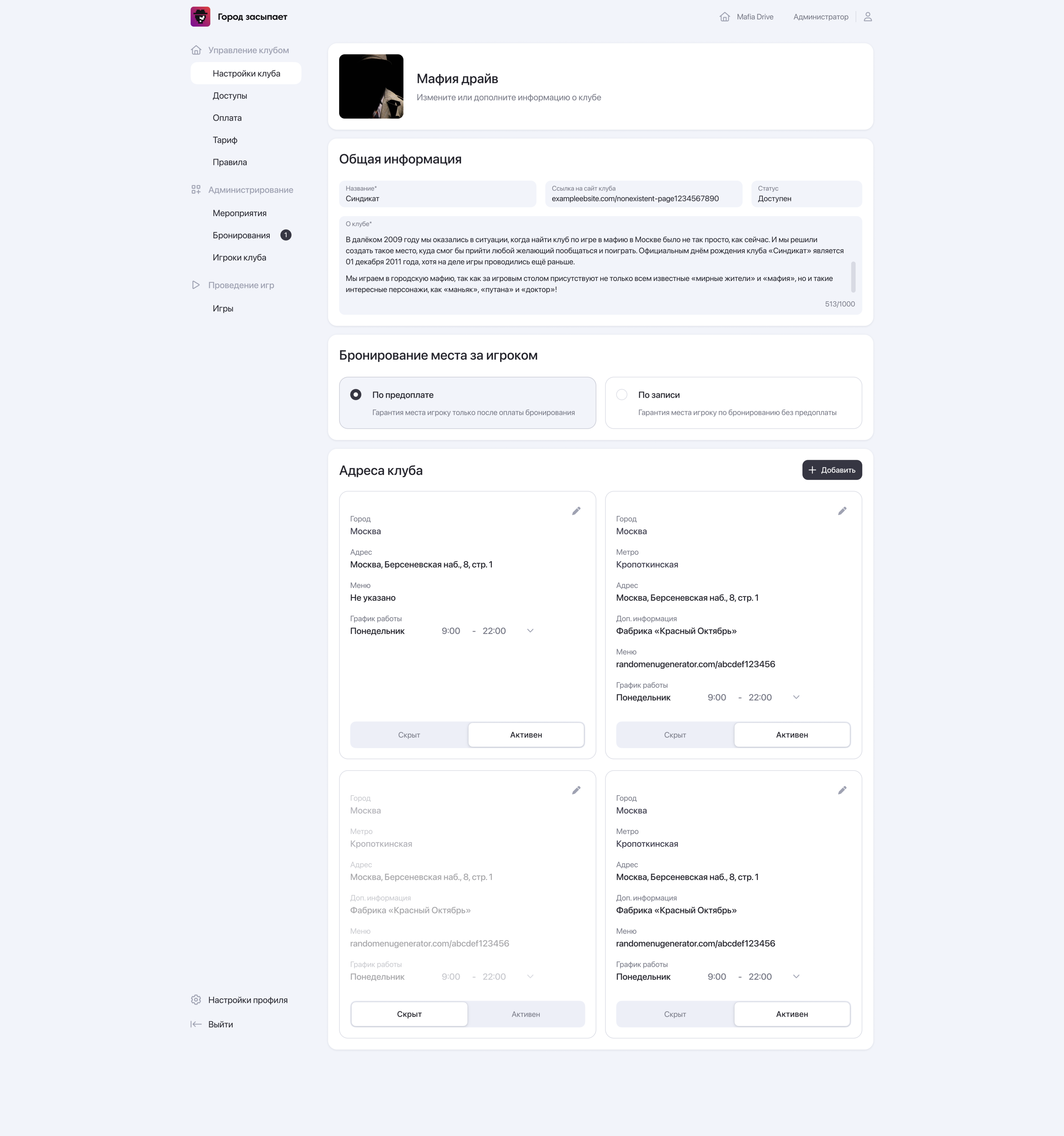
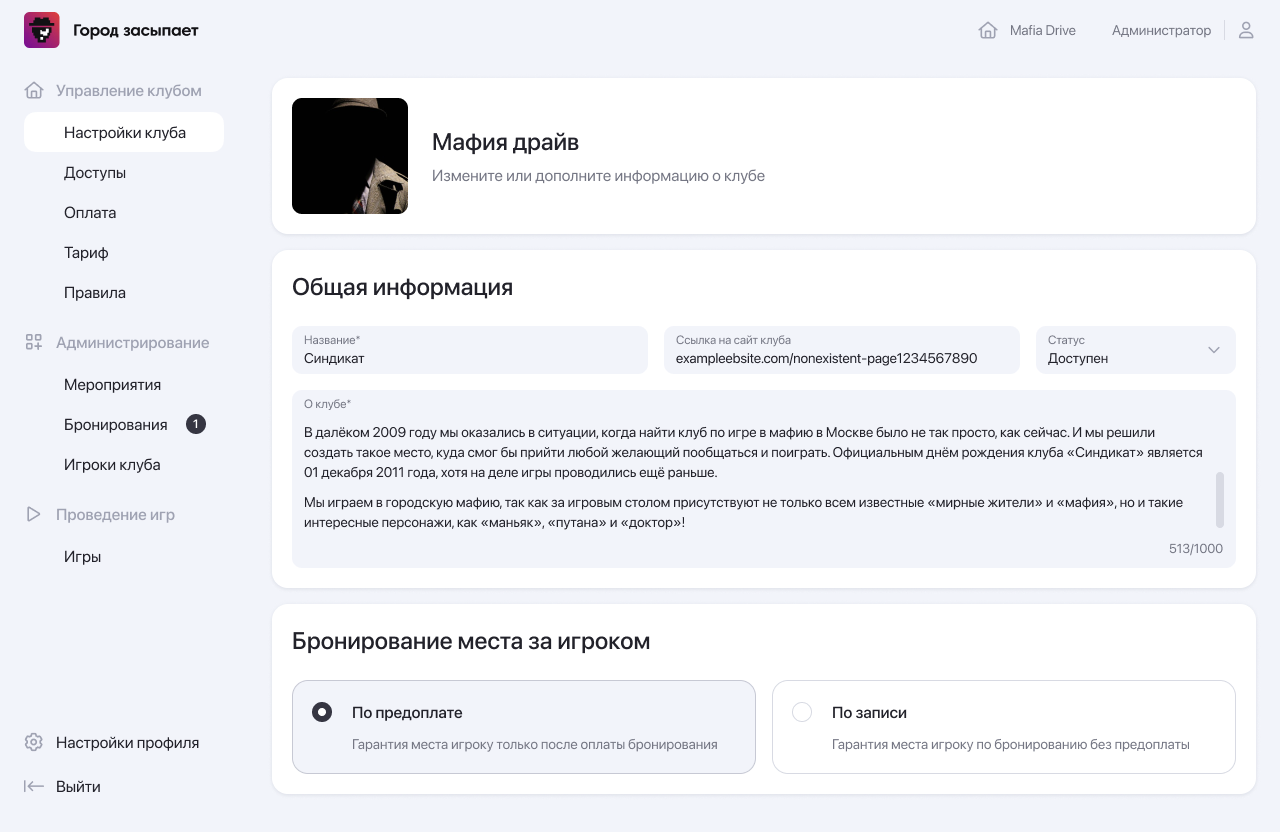
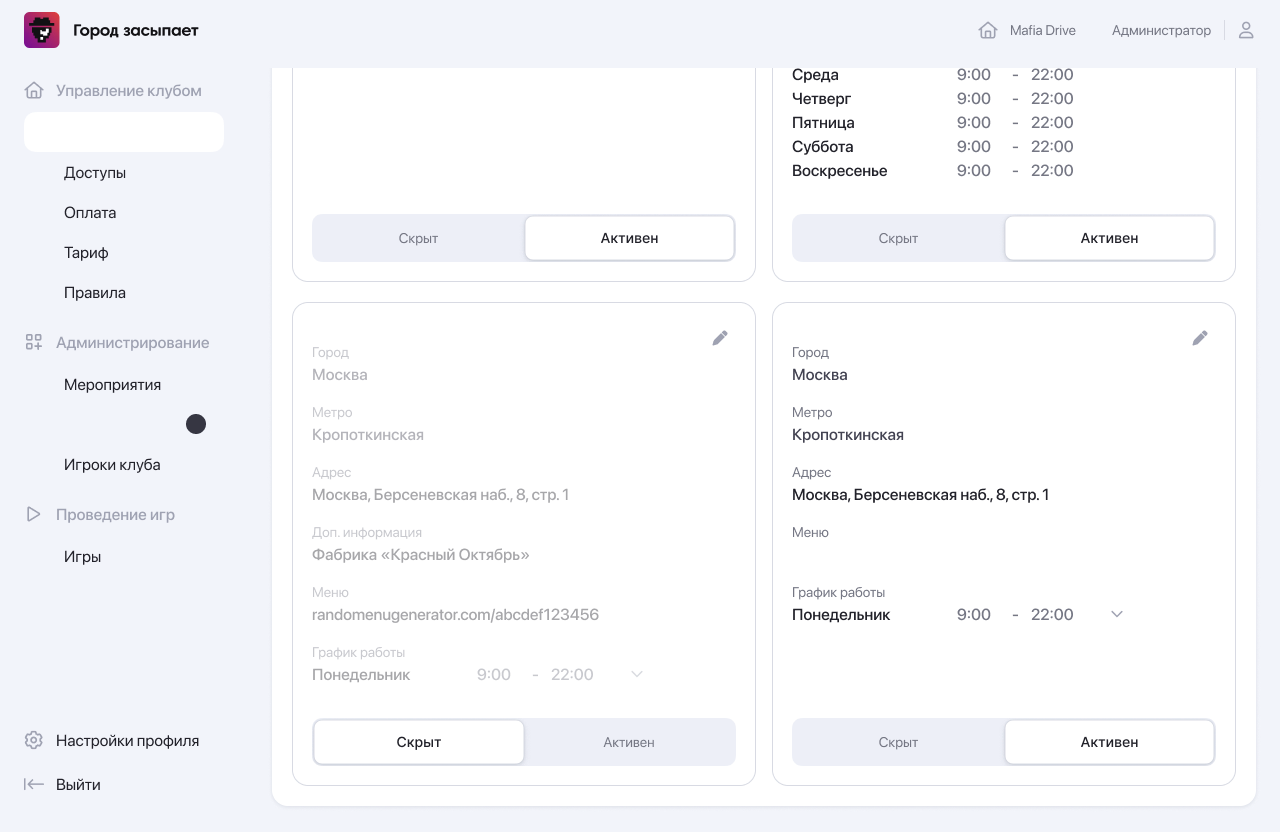
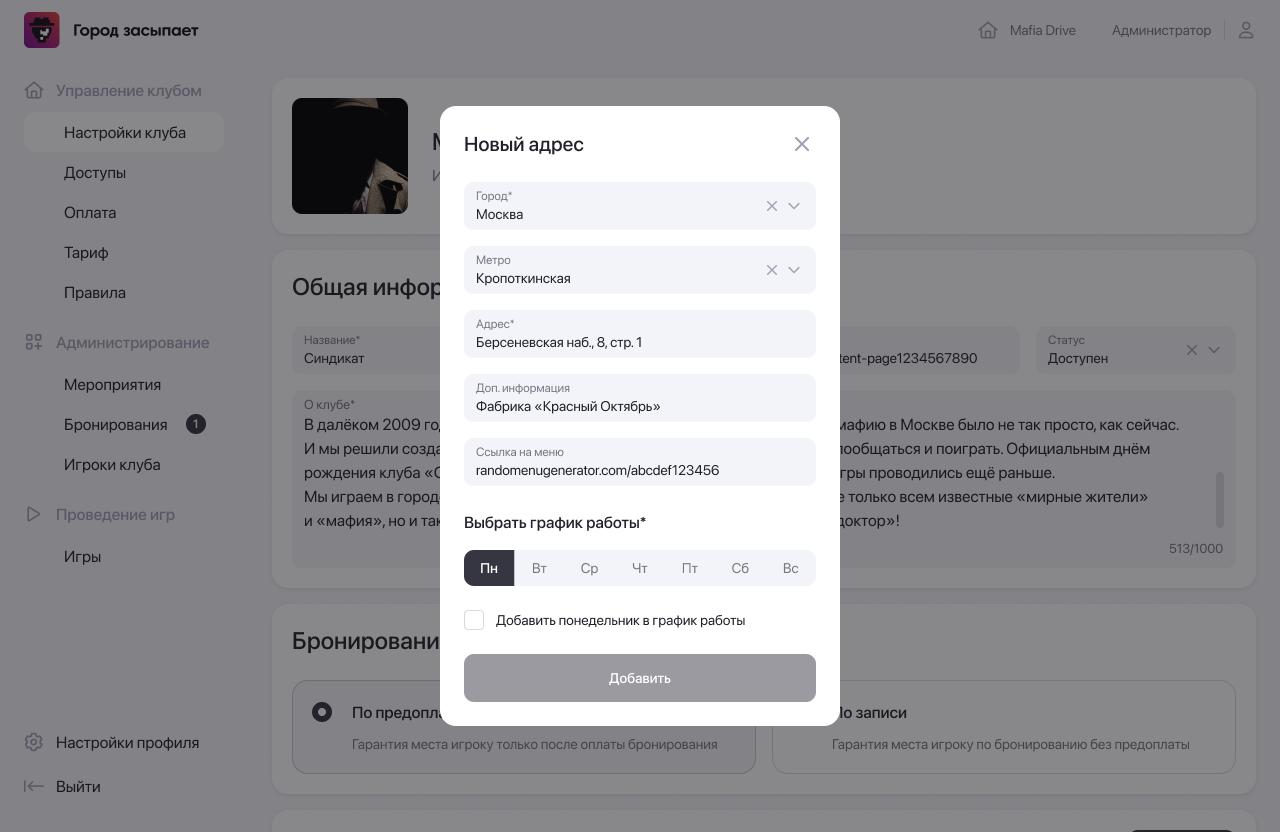
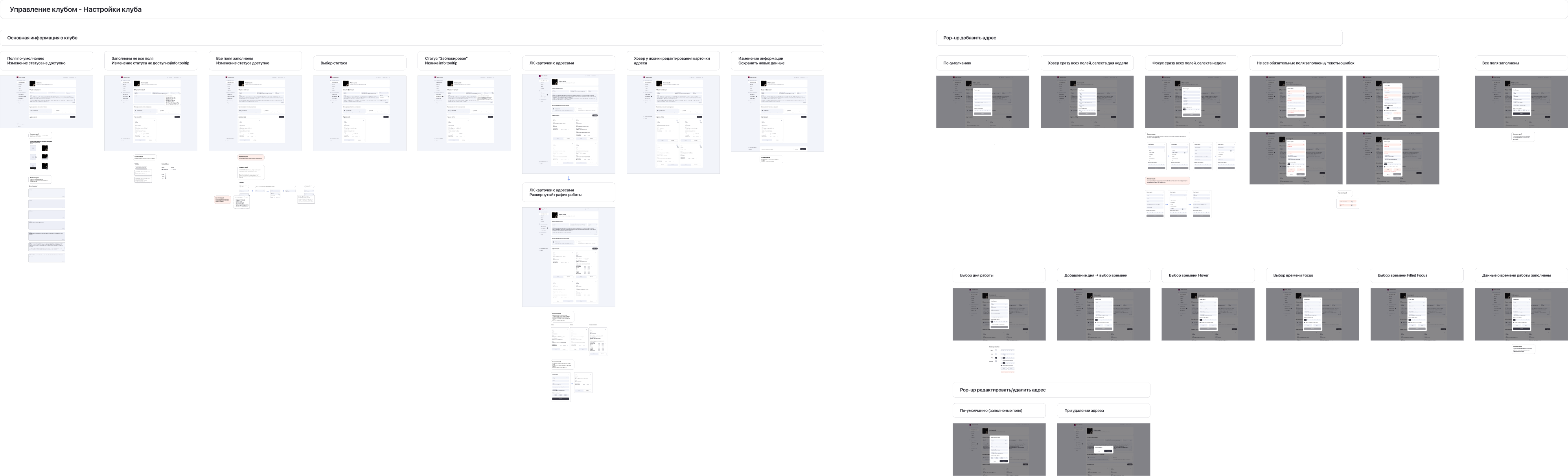
Owners could edit the club’s name and description, upload a logo and banner, manage its status and add multiple venues. For each venue, owners could specify the city, metro station, schedule, additional details and whether the venue was active.
I separately worked through the dependencies between club settings and subsequent flows. For example, the owner chose whether a player’s place was confirmed immediately after booking or only after payment. This setting affected the available payment methods and the statuses of future bookings.
Club settings therefore became the foundation for the other sections, rather than an isolated form.
Payment methods
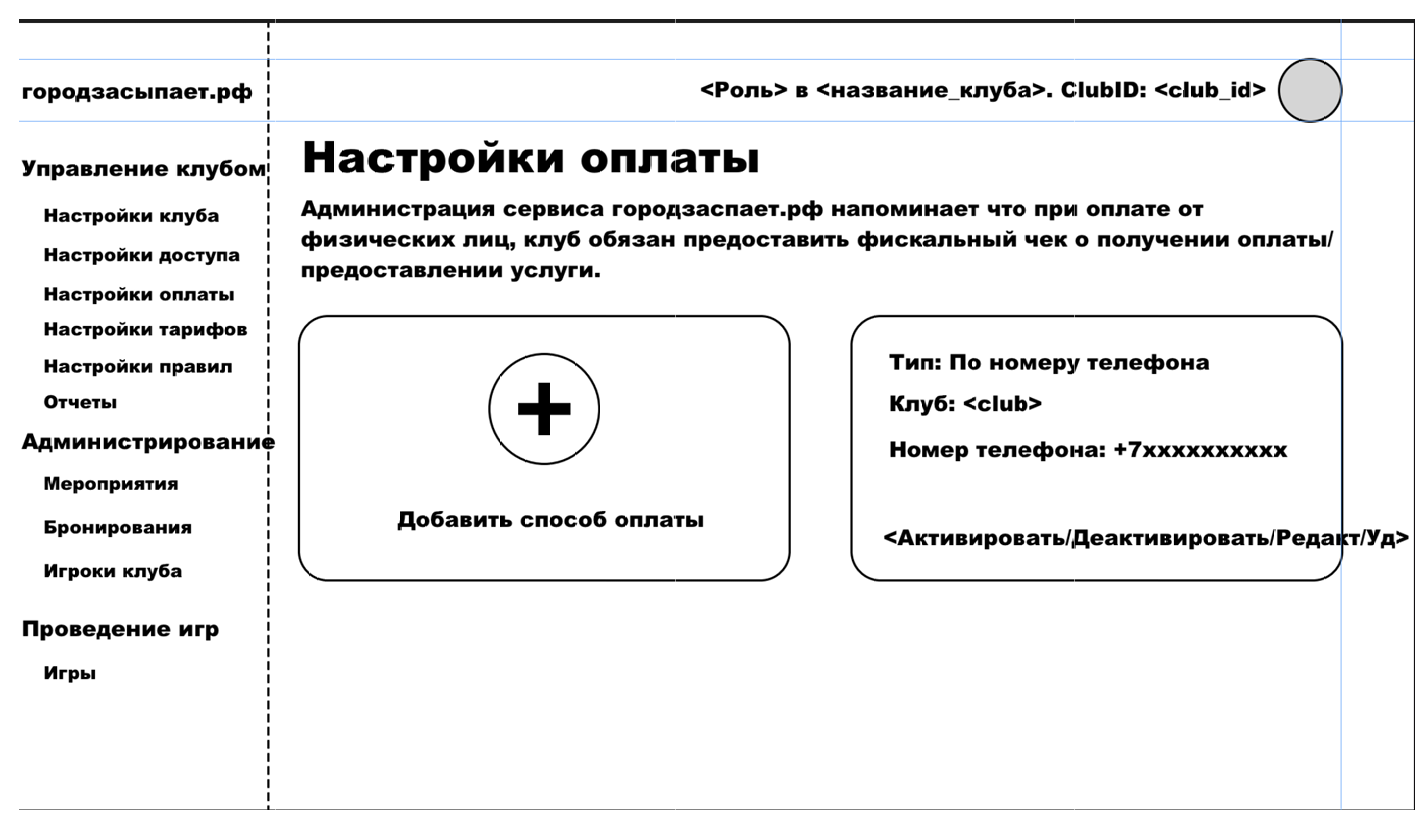
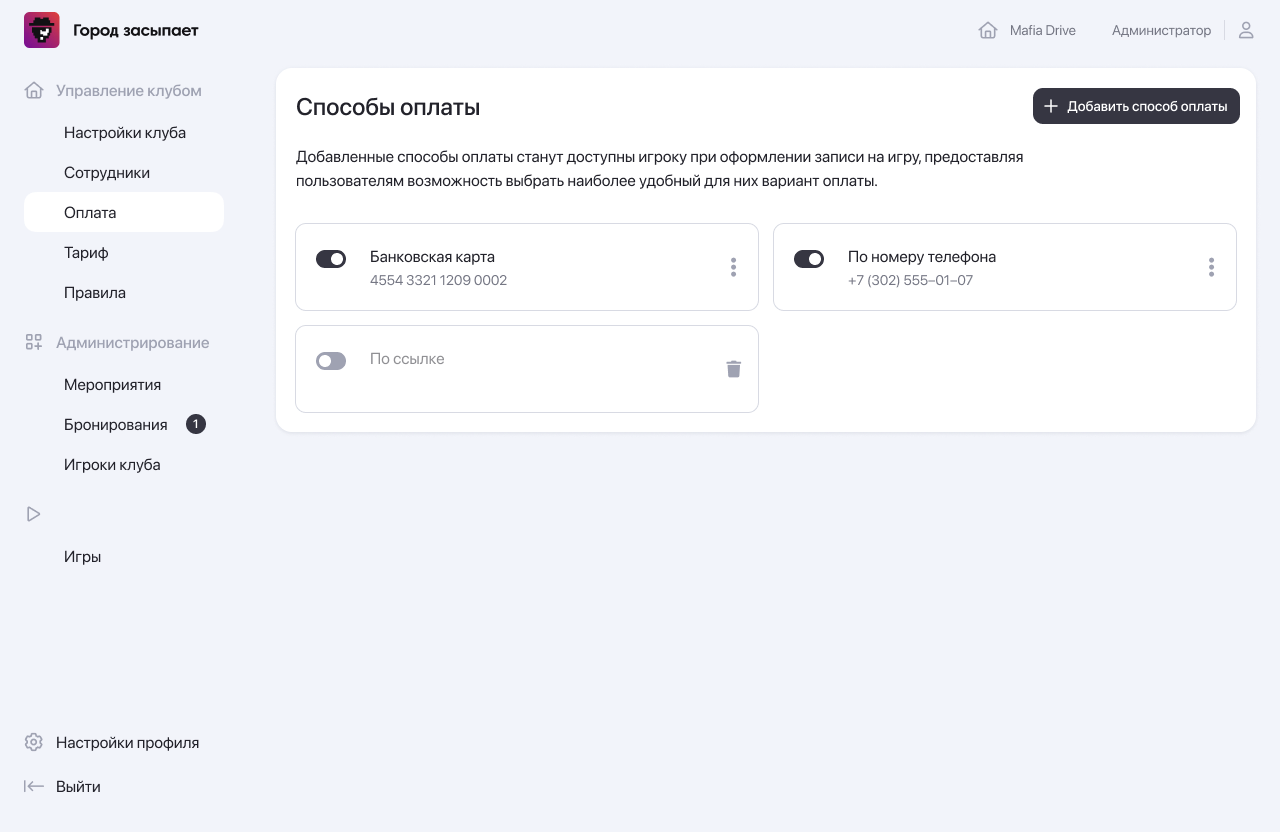
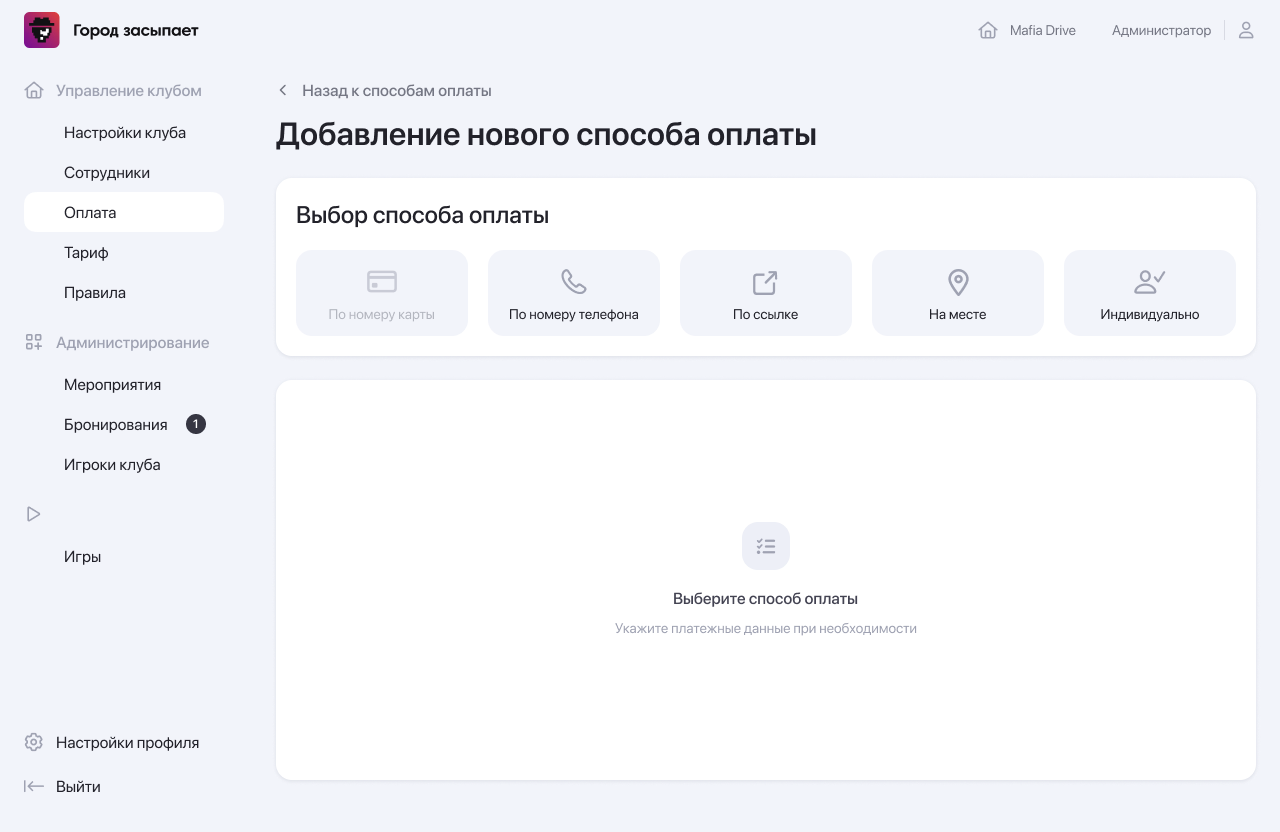
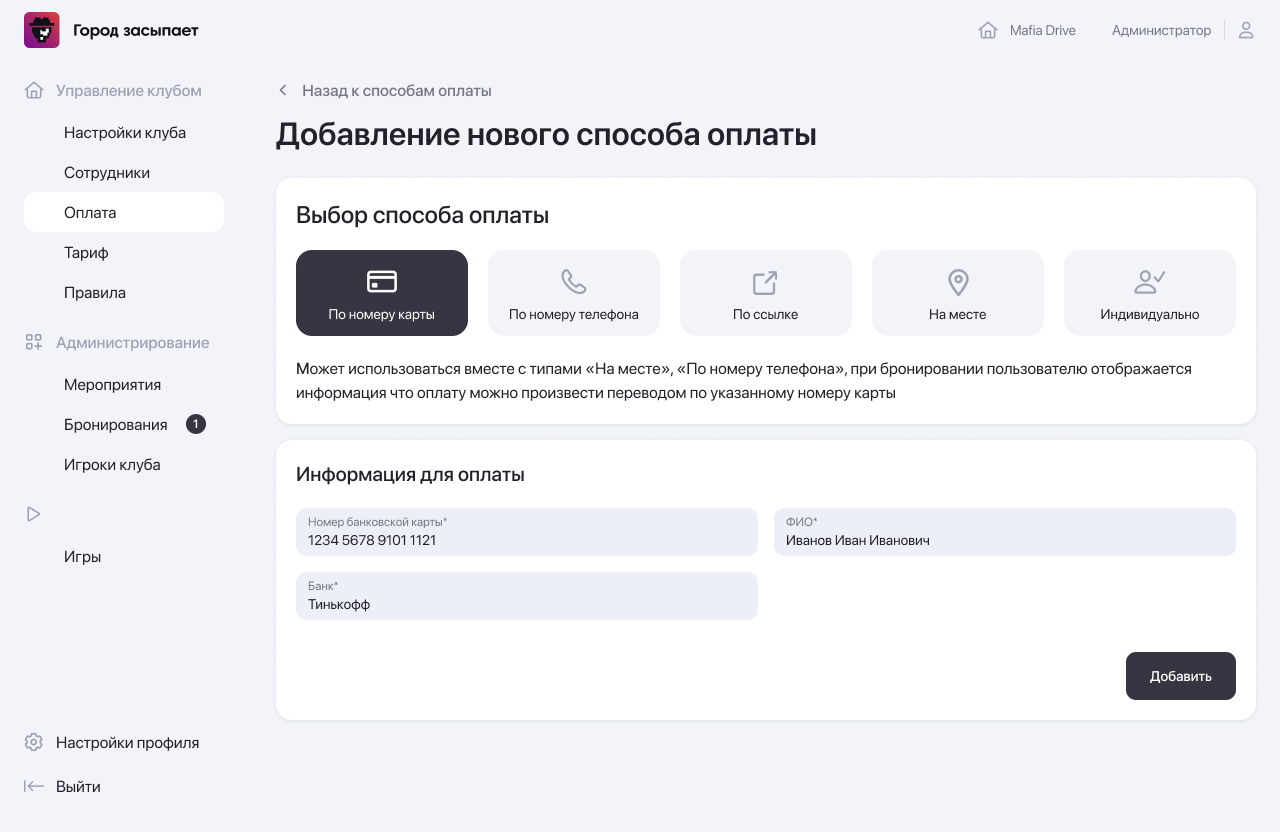
Players could pay at the venue, make a bank transfer using a phone or card number, follow a payment link, or use a custom method set by the club.
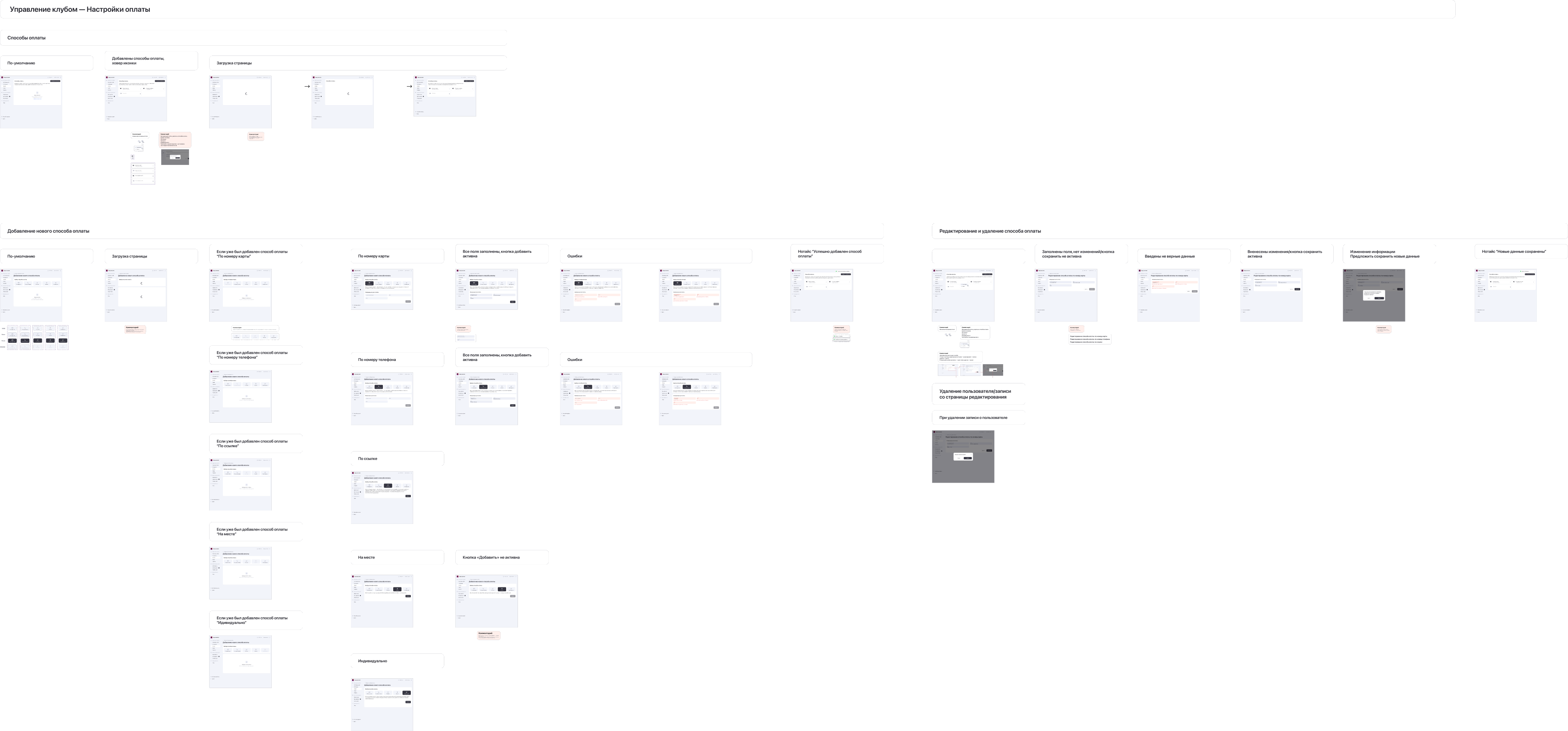
I designed the payment method list and the flows for creating, editing, activating and deleting methods. The form changed according to the selected option: a phone transfer showed phone number and bank fields, while a card transfer required card details.
Some payment methods could not be combined with certain booking models. Together with the product manager and developers, we clarified these dependencies and decided when an option should be hidden, disabled or accompanied by an explanation.
When staff chose a potentially risky payment method, the interface showed a warning before they saved it.
Pricing settings
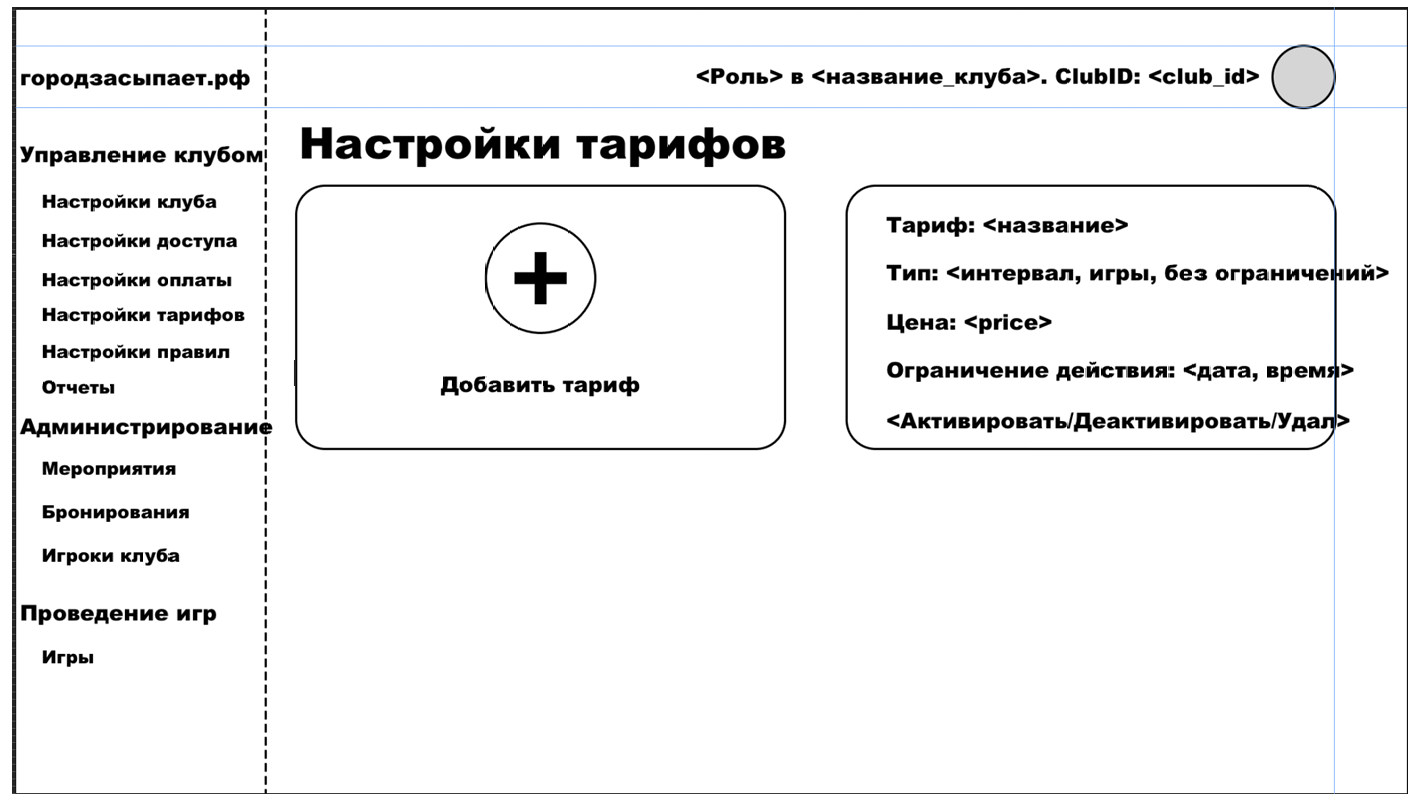
The next area was the pricing plans that a club offered players when booking.
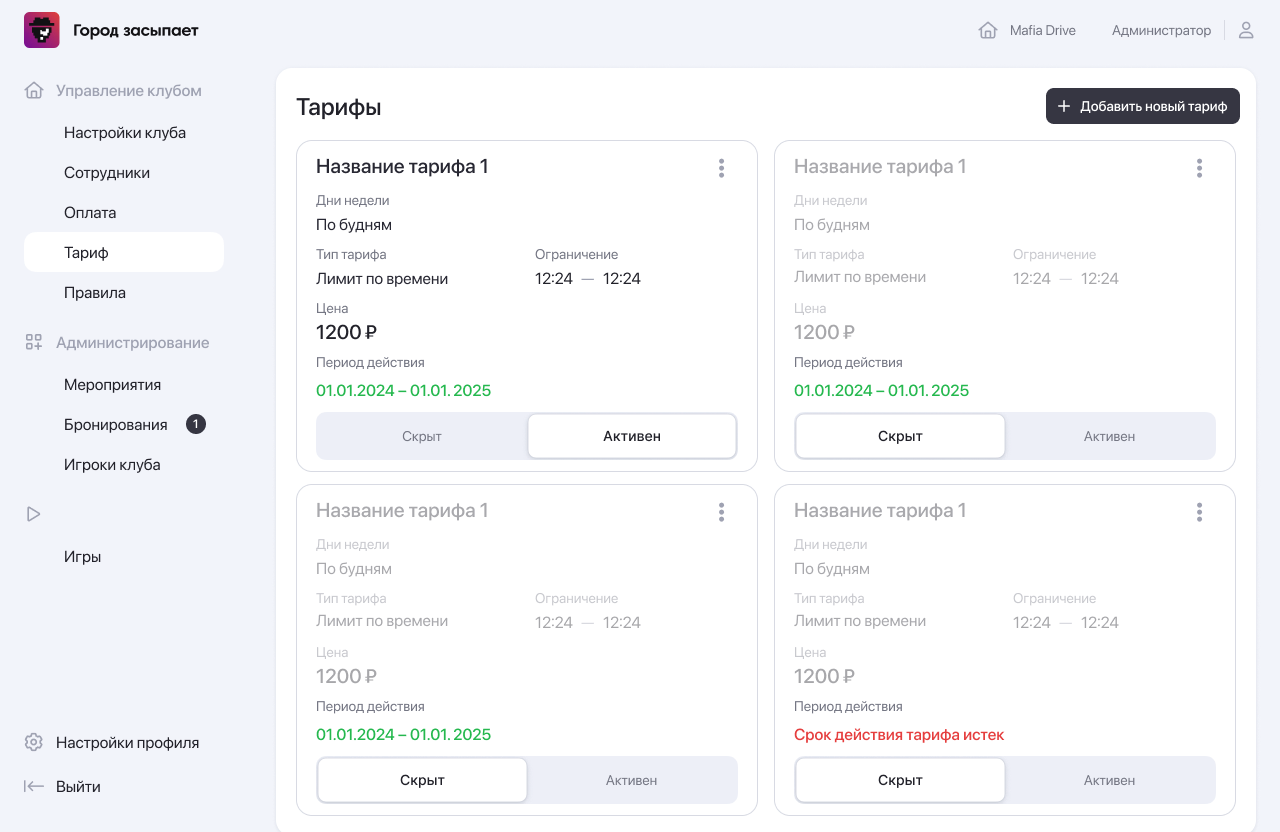
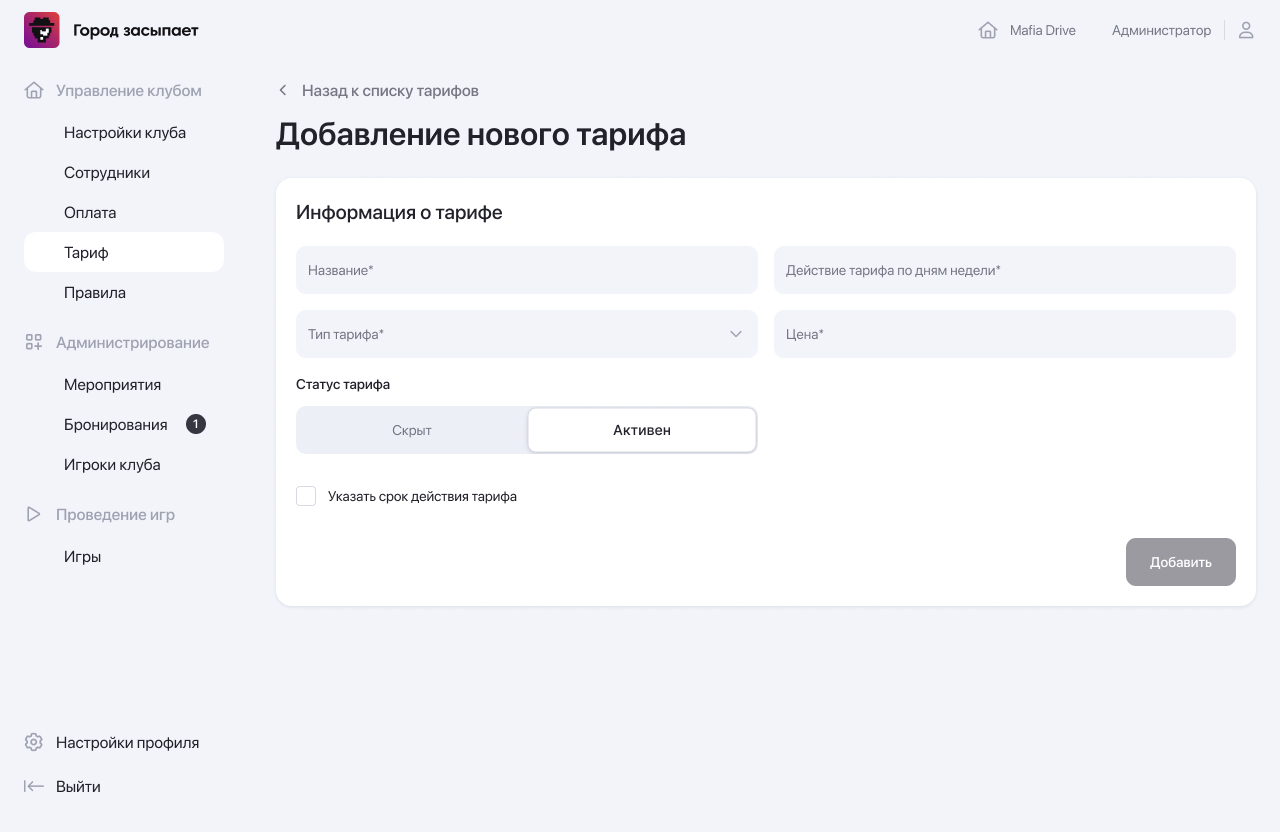
Each plan had a name, a price, the days it applied and a period of availability. Owners chose one option per plan. They could limit it by time or number of games, or offer unlimited access.
I translated this logic into a dynamic form: after a plan type was selected, the interface showed only the related fields and explained how the limit would affect the booking.
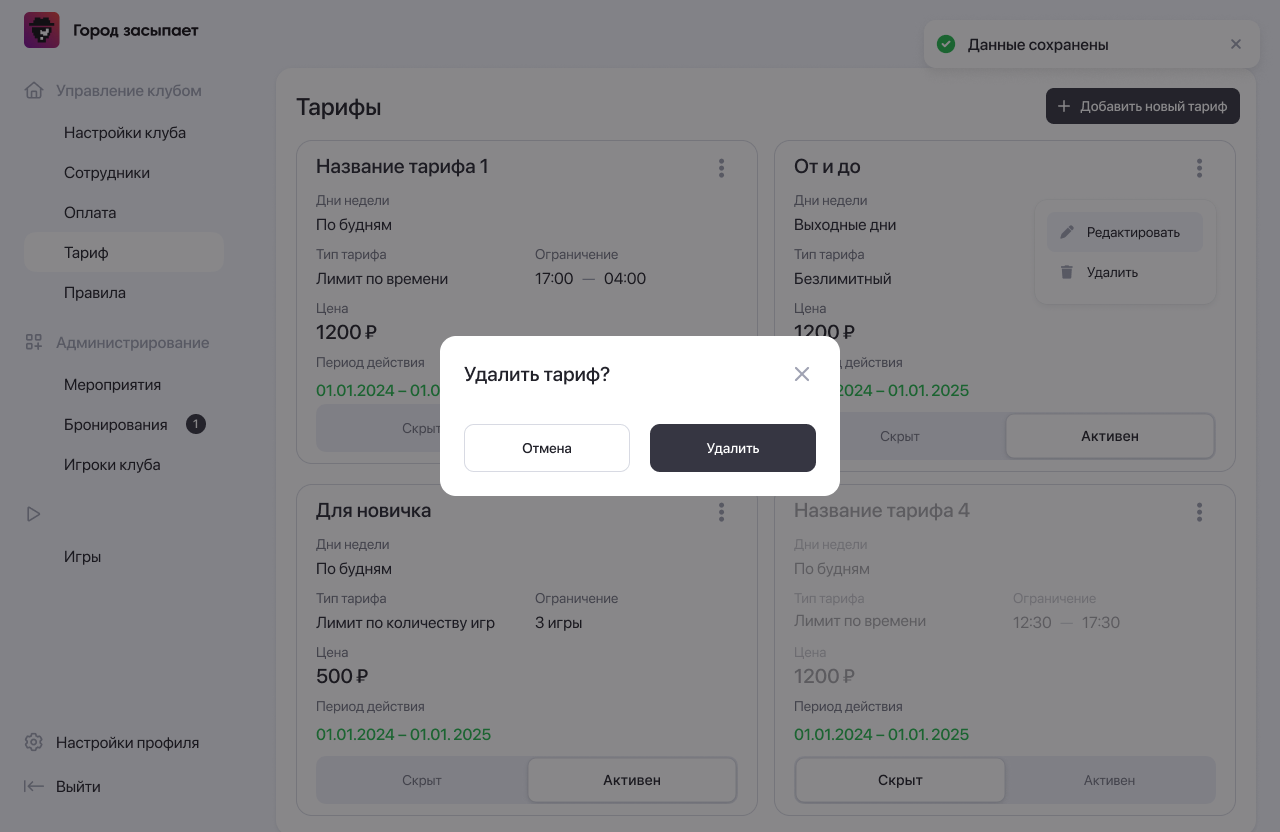
In the pricing list, owners could see the main conditions and quickly activate, deactivate, edit or delete a plan.
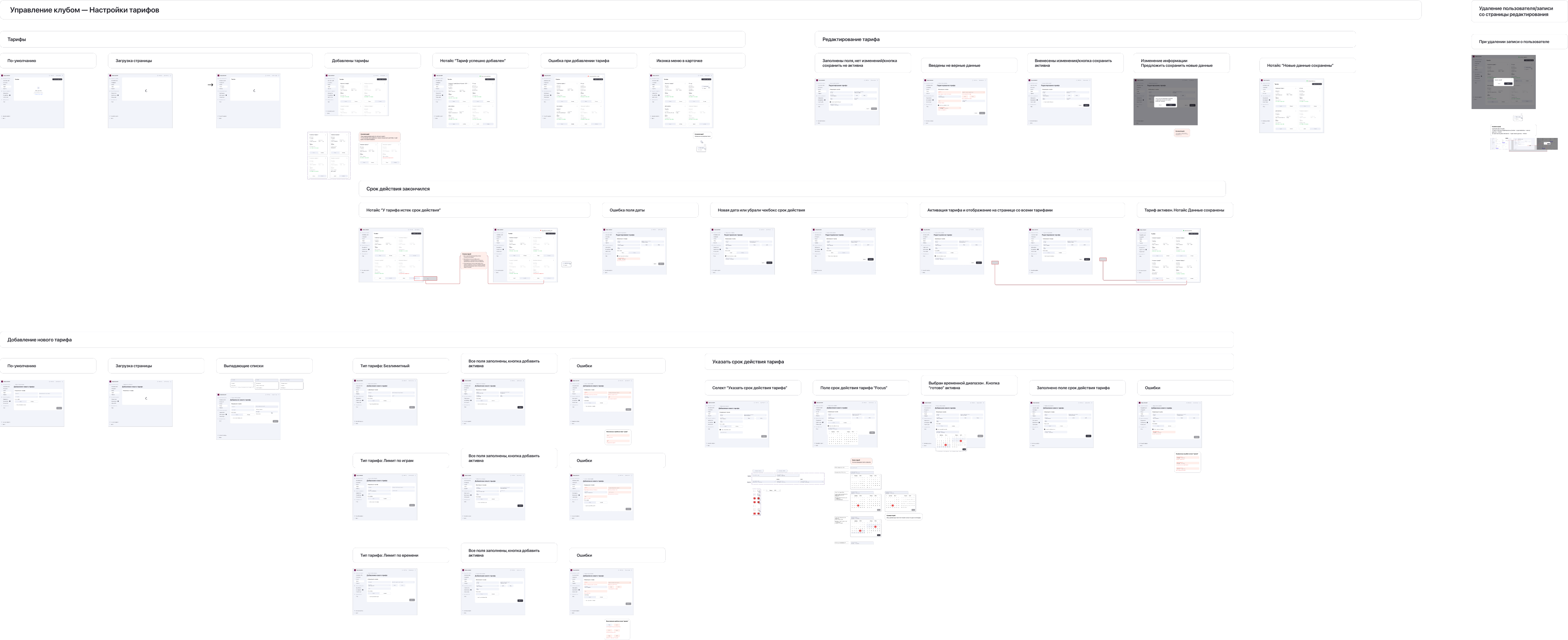
This turned a complex model with several mutually exclusive parameters into a sequential setup flow.
Access settings
Each club needed distinct capabilities for its owner, administrators and hosts.
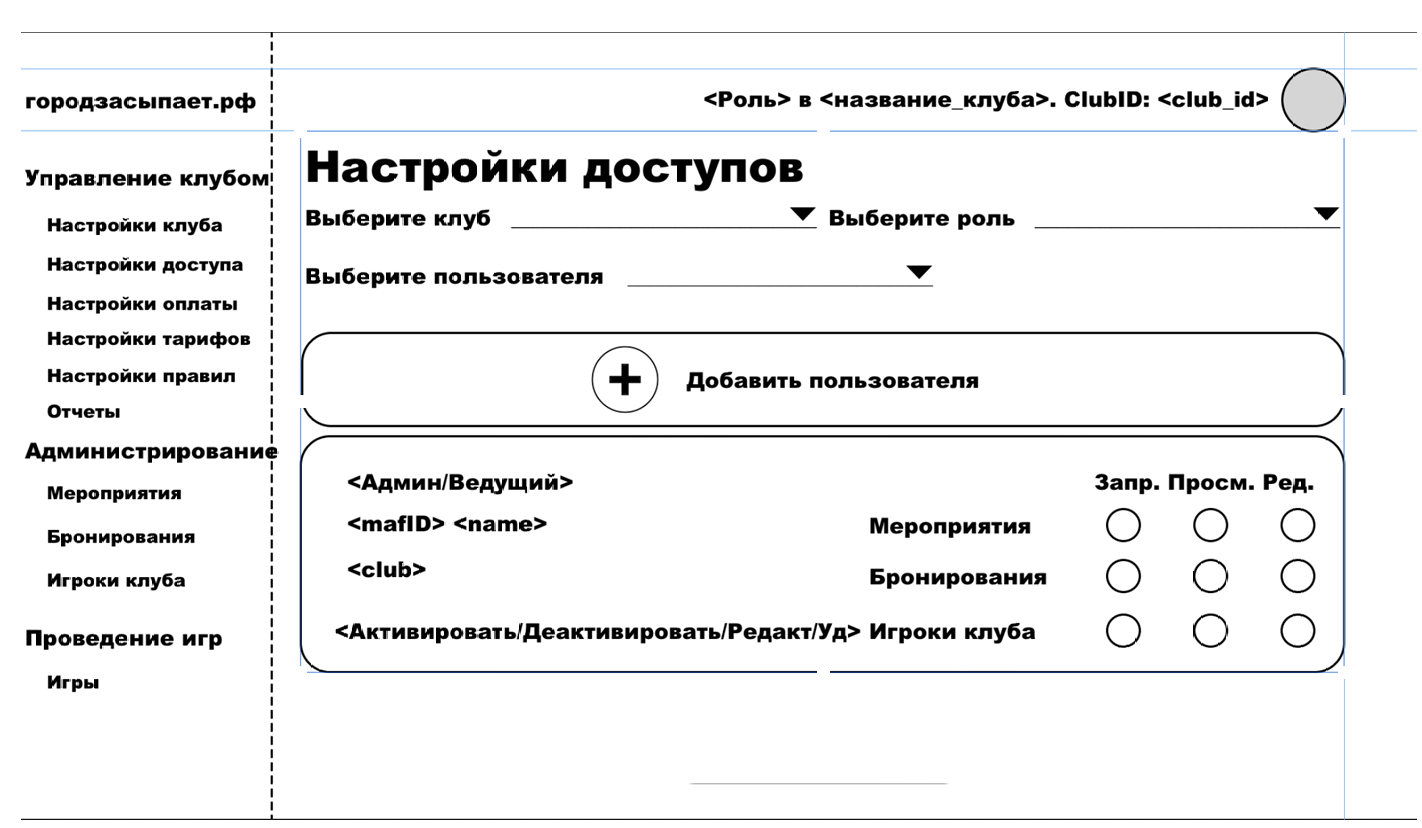
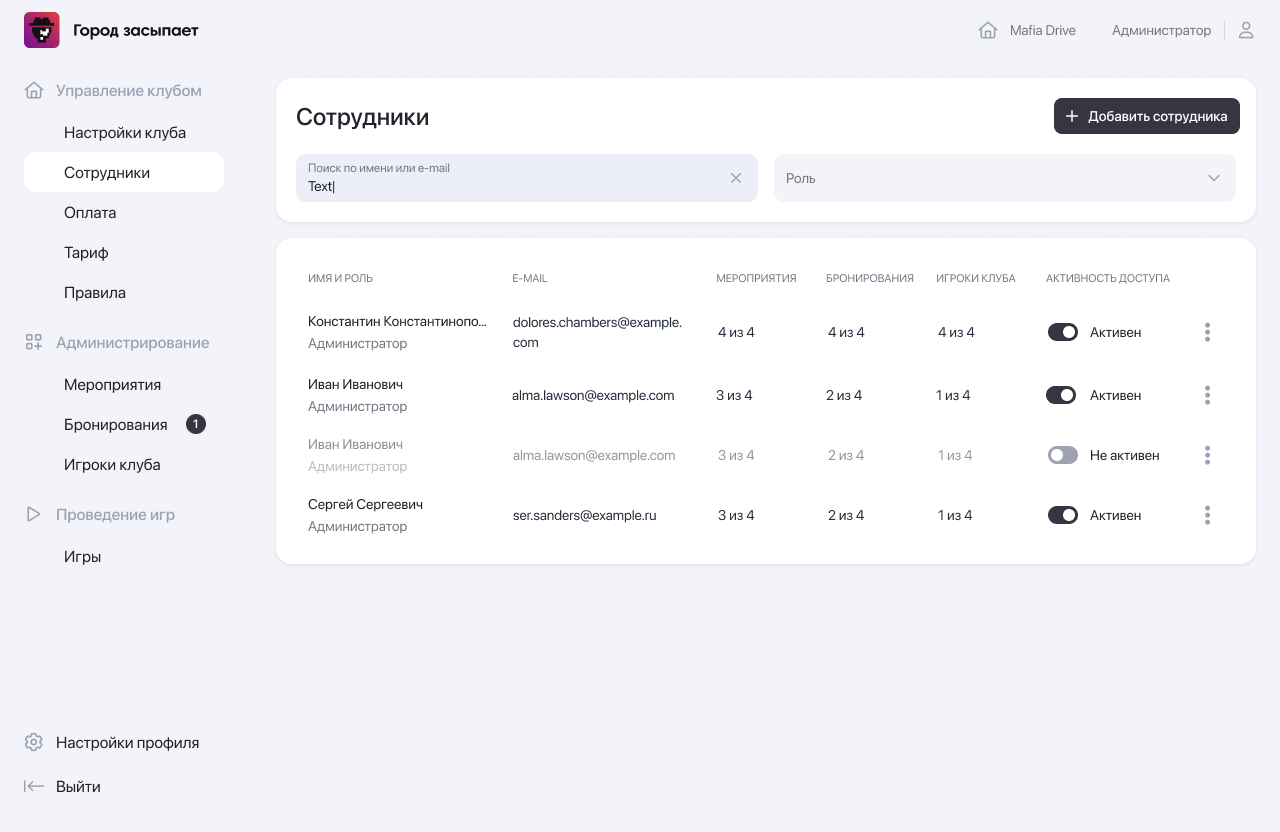
Owners could add staff, assign roles and activate or deactivate their access. Administrators also had configurable permissions for events, bookings and club players.
Owners could grant staff permission to view or add records. For editing and deleting, they could grant access to a person’s own records or to everyone’s. Some combinations of permissions were mutually exclusive.
I designed the staff assignment flow and a permissions interface that showed specific available actions rather than technical values.
I also accounted for people working at several clubs in different roles. Selecting a club and role changed the available account sections and functions.
This helped owners distribute responsibility among staff without giving them unnecessary access.
Bookings
Managing player requests became one of the central workflows.
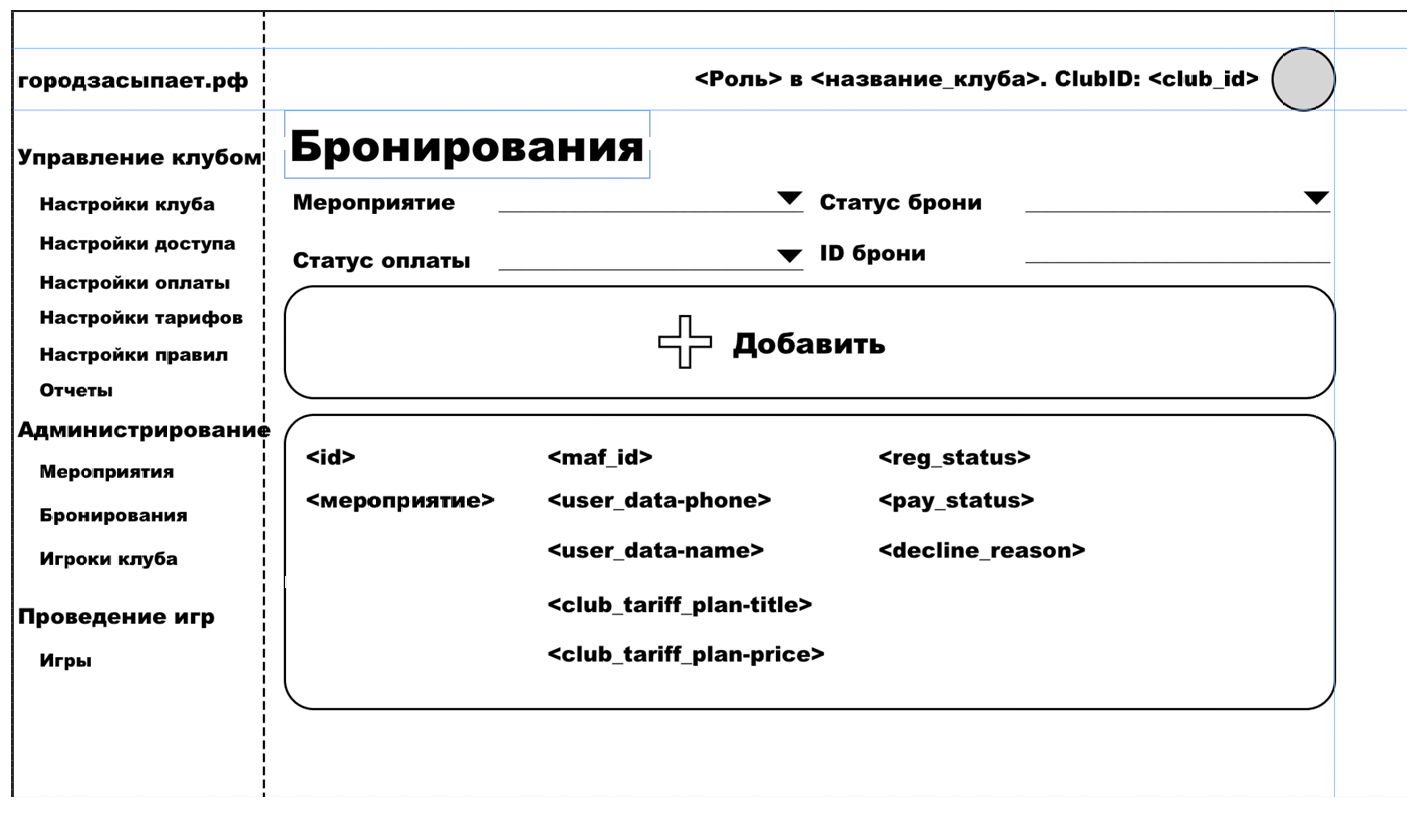
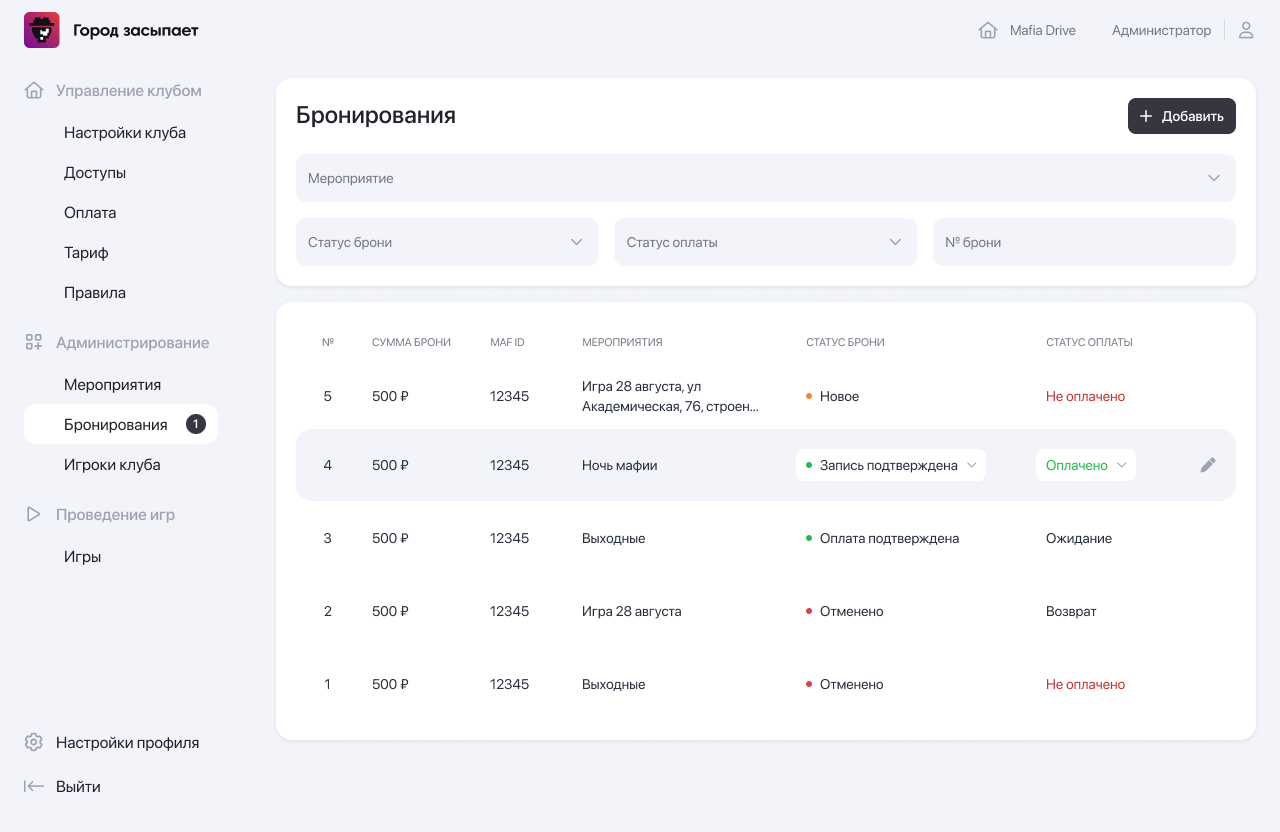
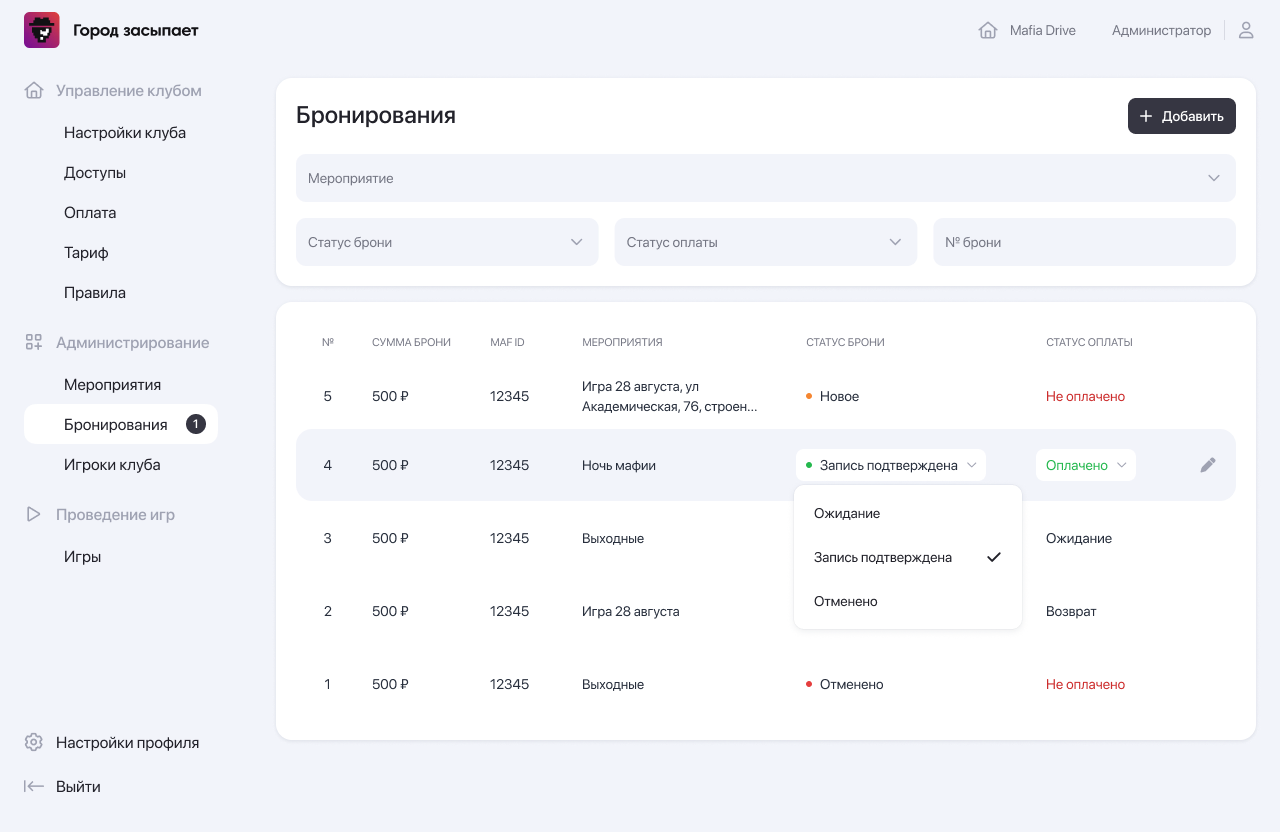
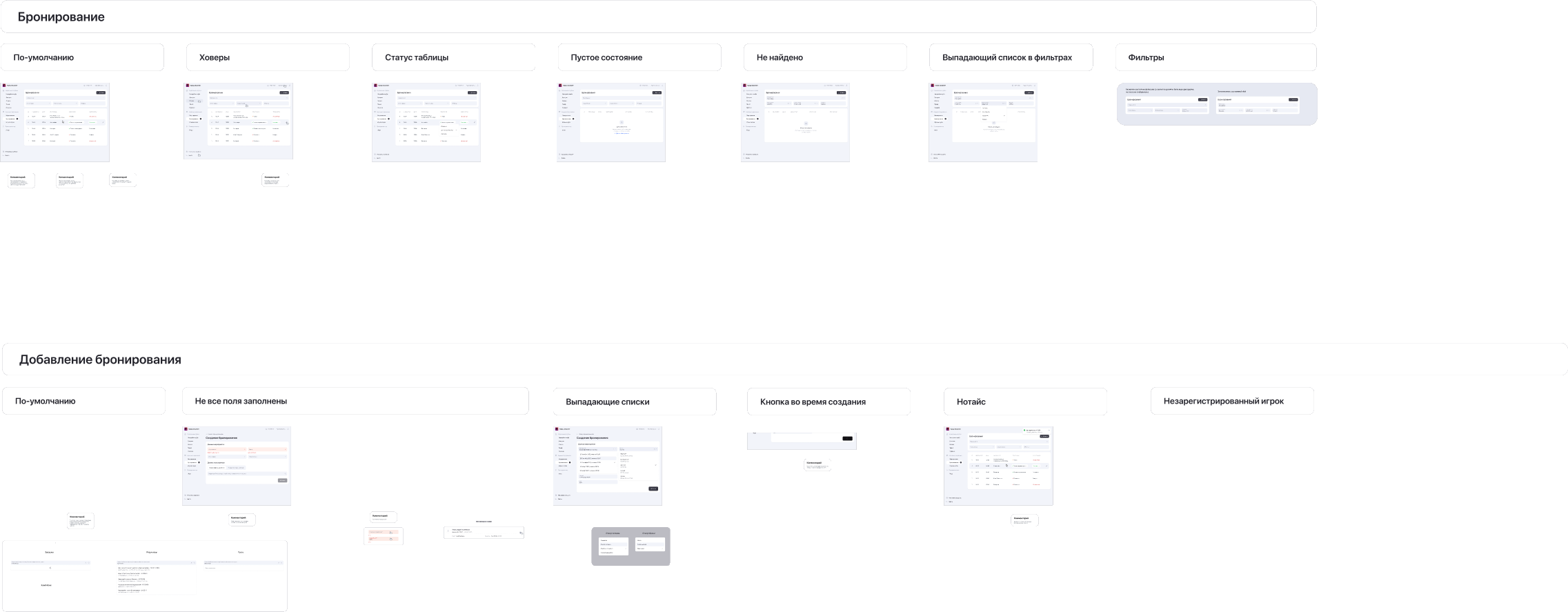
I designed a booking list with filters for event, booking status, payment status and booking ID. Each card showed the player’s details, selected event, pricing plan, cost and current request status.
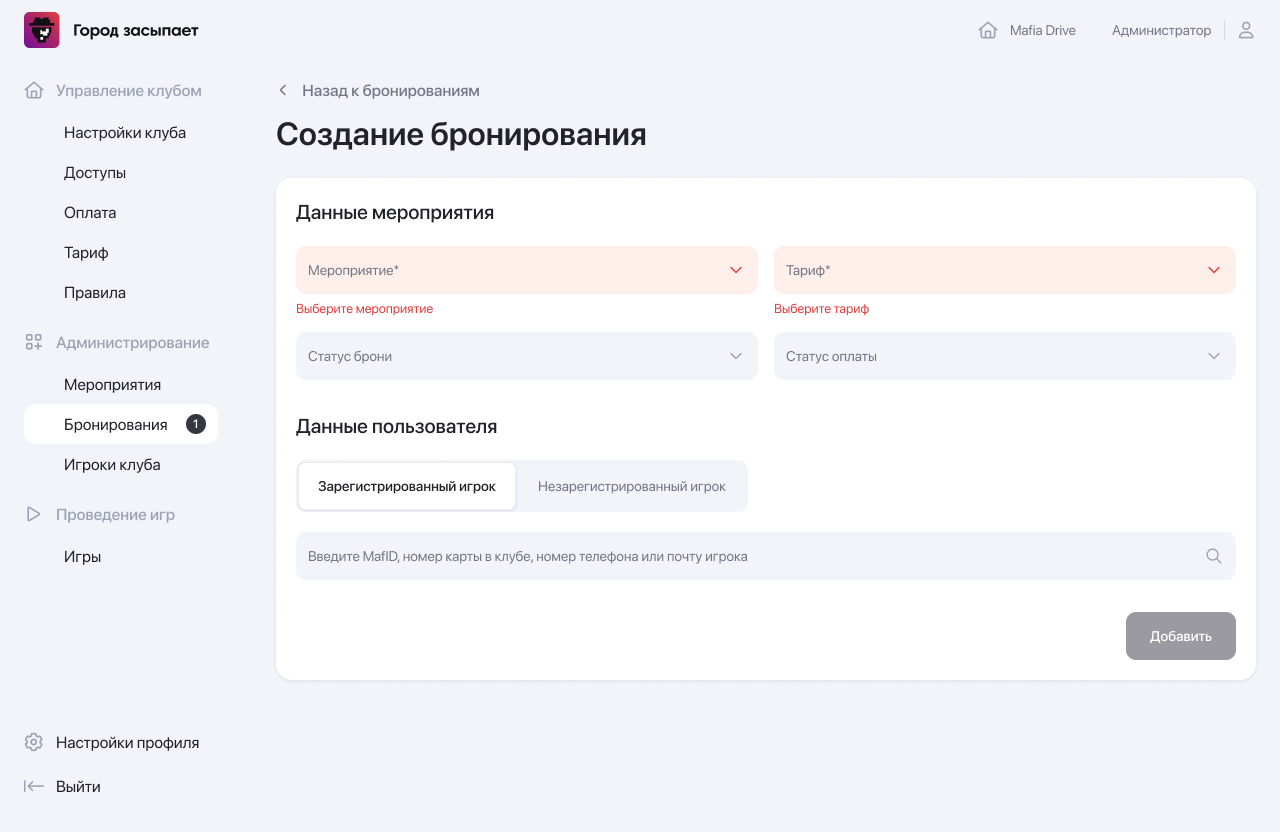
I also worked through the flow for staff to create a booking. A player could be found by MafID, club card number or email. If they did not have an account, their details were entered manually.
The main challenge was the relationship between booking and payment statuses. For example, confirming a payment could also move a new request to “confirmed by payment”. When a paid booking was cancelled, the system needed to ask whether the money would be refunded, change both statuses and save the cancellation reason. If payment had not been received, the flow ended differently.
Rules
Configuring game rules was one of the most complex areas.
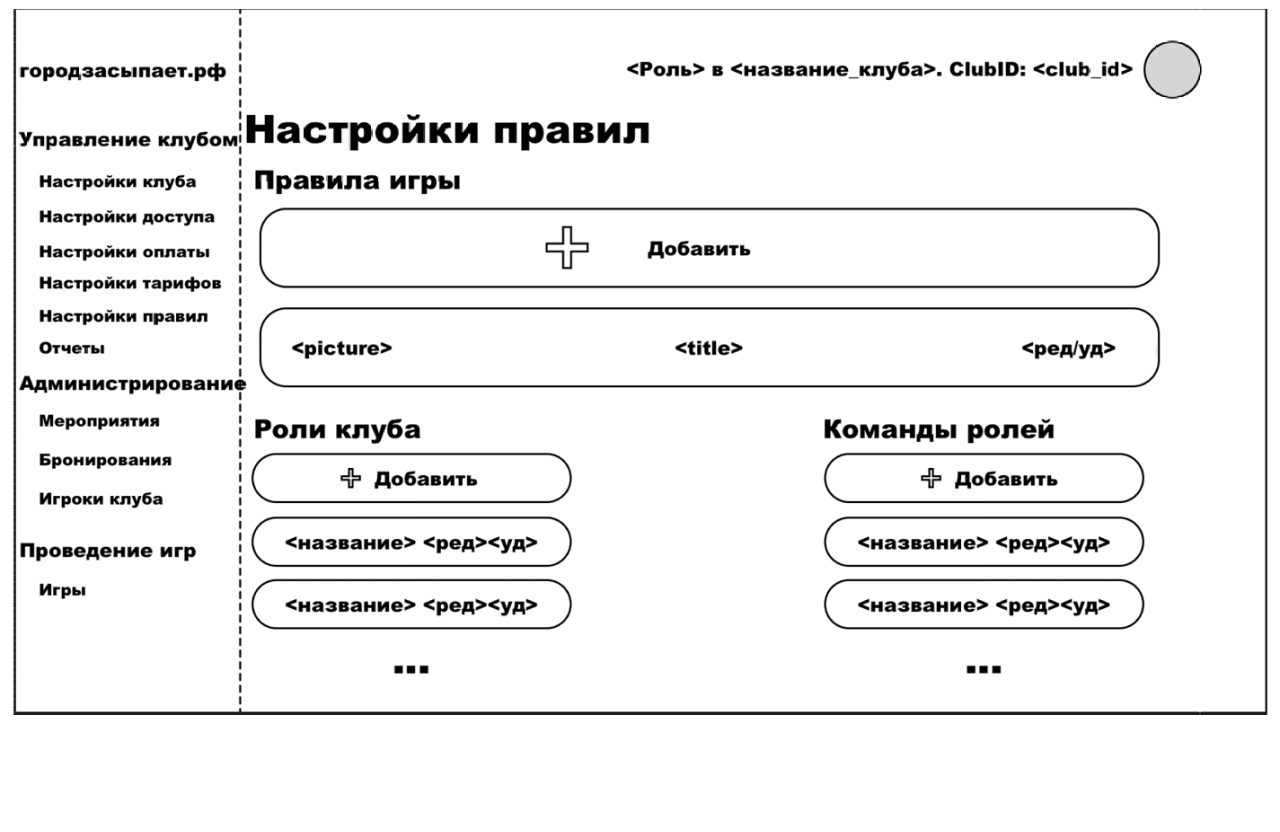
In the original model, the entities depended on one another: the club first created rules, then teams and only then roles. Without following this sequence, users could not link the data correctly or complete the setup.
I reworked the section’s structure and made the dependencies between steps explicit. Unavailable actions were disabled, and the interface explained what needed to be created before continuing.
This prevented incomplete configurations that could not be saved or used during a game.
Working with the team
We met regularly to work through complex flows, explore ideas and agree on solutions.
I presented work in progress, explained the interface logic and checked with the product manager and developers that each solution fitted the business process and technical constraints.
Together with the front-end developer, we worked through reusable forms, field states, filters and confirmations. This naturally contributed to the shared component library: the same tasks no longer required rebuilding the interface in each section.
Design system and team support
Throughout the work, I used the existing design system and extended it with new components and states.
I added patterns for tables, cards, filters, forms, statuses, confirmations and system constraints. I made sure the same logic looked and worked consistently across product sections.
I also helped other designers build layouts from existing components, checked adherence to the design system and took part in flow reviews. When reviewing layouts, I considered not only the visuals but also the completeness of states, the sequence of actions and potential conflicts in the business logic.
This helped the team work faster across many connected sections while maintaining a coherent interface.
Results
Investment helped the team launch The City Sleeps. Mafia clubs in major Russian cities began using it to run their operations.
- For club owners
- Owners could manage bookings, venues, pricing, payments and staff permissions in one workspace.
- For club staff
- Shared booking statuses made handovers clearer, reduced checks across chats and spreadsheets, and lowered the risk of losing a request.
Other designers and developers used my interaction patterns and additions to the design system to build new sections of the platform.